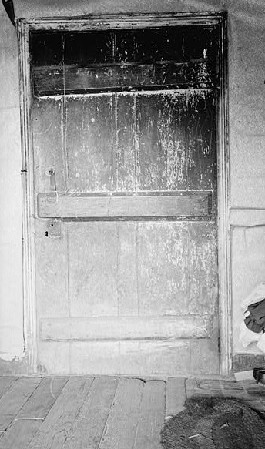
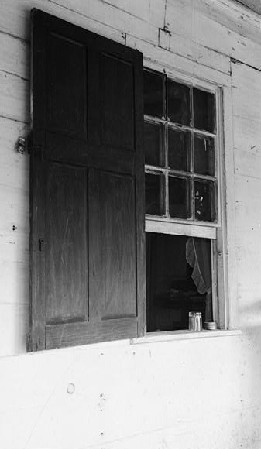
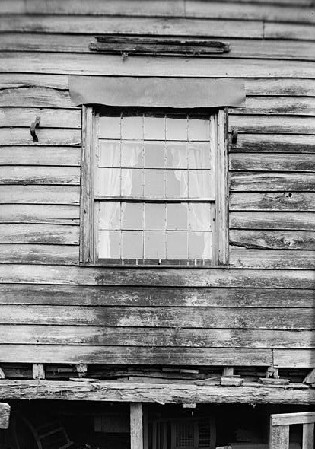
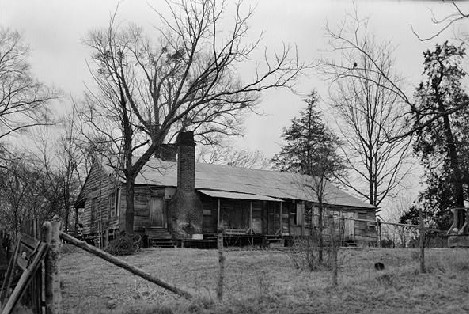

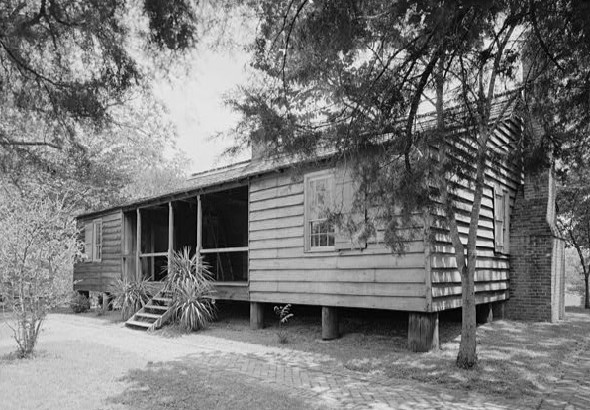
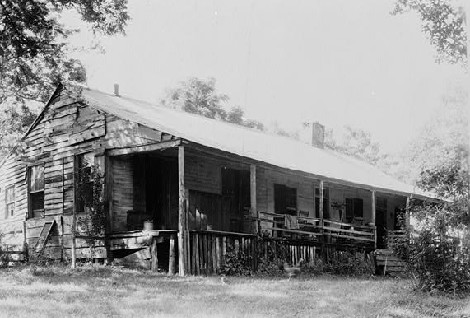
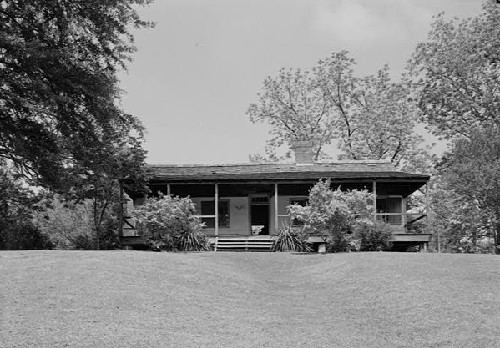

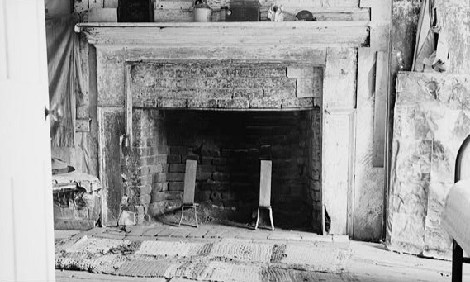
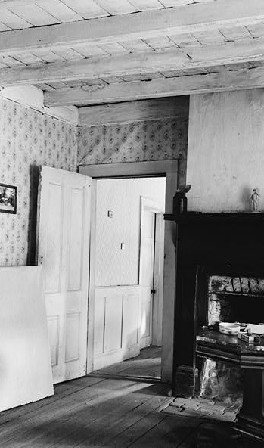
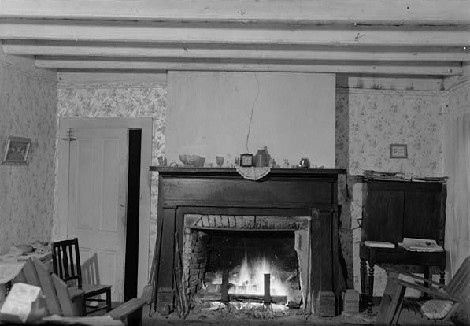
| The photos below were taken in 1937. |
| The Last Inn on the Natchez Trace |
| Mount Locust |



Of the 50 stands (inns) that dotted the Natchez Trace at the height of its foot-and-horseback traffic in
the late-1700 to mid-1800's, only Mount Locust remains. It's located about 15 miles from Natchez, in
Jefferson County, MS, and is one of the state's oldest structures. At one time known as "Mound
Plantation," the earliest construction is believed to have been built in about 1778 by John Blommart..
The following brief history is from the Library of Congress and was written by Stuart Barnette, an
architect with the National Park Service, in 1937:
"Mound Plantation (Chamberlain House) - built to be used as a tavern, for William Ferguson.
Ferguson built a one-room tavern in 1778 on what is supposed to be an Indian Mound, and what was, also,
the site of a Spanish Fort, near Uniontown (now extinct). A room at each end, then later, three rooms
across the back, were added after 1783. Other buildings on the plantation of 1830-40 which have
disappeared included: (1) a kitchen (2) a guest house ('Sleepy Hollow') -- a 2-story log or brick house of
four rooms, with double chimney (3) slave quarters (4) overseer's quarters (5) brick walks (6) the fort's
stockade (7) the fort's moat.
William Ferguson came to the Natchez District in 1776-77 and settled shortly thereafter on the Mound
Plantation property. The grant of the Spanish Government to Ferguson to 500 arpents of land bears the
date of March 15, 1783. The Spanish deed was confirmed by the U.S. Board of Commissioners in 1803.
Ferguson married Miss Polina Burch in 1783. In 1800, he was sheriff of Pickering County, and died during
the same year. Shortly after his death, his widow married James Chamberlain. Mrs. Chamberlain lived
until 1843. Her descendants continued to live on the property until it was acquired by the state of
Mississippi for the Park Service in 1937."
The building has been restored to early 1800's condition and is open to the public.
The three photos on the top portion of this page were taken in the 1970's. The rest of the photos
were taken in 1937, at a time when Mr. Bill Chamberlain was still in residence, before the N.P.S. had
begun any restoration. There are, also, a few present-day photos at the bottom of the page.
the late-1700 to mid-1800's, only Mount Locust remains. It's located about 15 miles from Natchez, in
Jefferson County, MS, and is one of the state's oldest structures. At one time known as "Mound
Plantation," the earliest construction is believed to have been built in about 1778 by John Blommart..
The following brief history is from the Library of Congress and was written by Stuart Barnette, an
architect with the National Park Service, in 1937:
"Mound Plantation (Chamberlain House) - built to be used as a tavern, for William Ferguson.
Ferguson built a one-room tavern in 1778 on what is supposed to be an Indian Mound, and what was, also,
the site of a Spanish Fort, near Uniontown (now extinct). A room at each end, then later, three rooms
across the back, were added after 1783. Other buildings on the plantation of 1830-40 which have
disappeared included: (1) a kitchen (2) a guest house ('Sleepy Hollow') -- a 2-story log or brick house of
four rooms, with double chimney (3) slave quarters (4) overseer's quarters (5) brick walks (6) the fort's
stockade (7) the fort's moat.
William Ferguson came to the Natchez District in 1776-77 and settled shortly thereafter on the Mound
Plantation property. The grant of the Spanish Government to Ferguson to 500 arpents of land bears the
date of March 15, 1783. The Spanish deed was confirmed by the U.S. Board of Commissioners in 1803.
Ferguson married Miss Polina Burch in 1783. In 1800, he was sheriff of Pickering County, and died during
the same year. Shortly after his death, his widow married James Chamberlain. Mrs. Chamberlain lived
until 1843. Her descendants continued to live on the property until it was acquired by the state of
Mississippi for the Park Service in 1937."
The building has been restored to early 1800's condition and is open to the public.
The three photos on the top portion of this page were taken in the 1970's. The rest of the photos
were taken in 1937, at a time when Mr. Bill Chamberlain was still in residence, before the N.P.S. had
begun any restoration. There are, also, a few present-day photos at the bottom of the page.

| The front entrance |
| Close-up of the front door |
| Window on a side of the house |
| Fire burning in one of the fireplaces |
| A second fireplace |
| View of the front |
| View of the back |
| Left, an interior doorway; right, the inside of an exterior door |
| Window opening onto front porch |
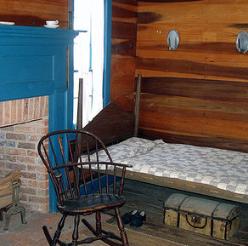
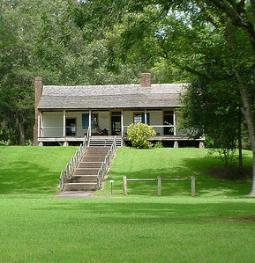
| Below, recent photos of Mount Locust Stand, restored to its appearance in the early 1800's, looking very much as it must've looked to weary travelers on the long ago Natchez Trace. |
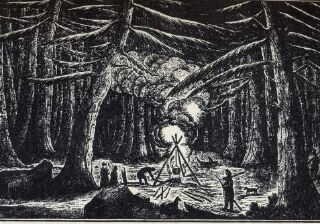
| "When the travelers stopped at night, they would hide their money in the woods some distance from the camp or stand to prevent being robbed." -- "Natchez Trace: The Outlaw Years" |