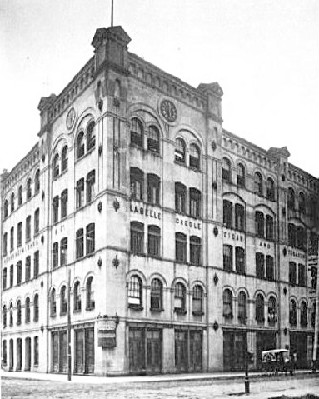
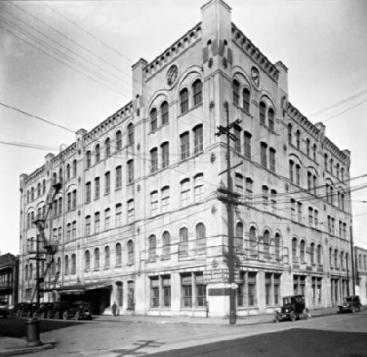
| La Belle Creole Cigar Company, 1892 Julia and Magazine Streets |
| Golden Age of New Orleans Cigars |

In what could be called the "golden age" of cigars - the latter part of the 19th and earlier
part of the 20th centuries - New Orleans was known as the cigar manufacturing capital of
the United States. During that time, there were as many as ninety-three cigar makers in
the city:
New Orleans native Simon Hernsheim founded S. Hernsheim Brothers in 1857. It was a
tobacco company that supplied tobacco leaves to the European market. By the 1880's,
the company had flourished to the point that Mr. Hernsheim was able to build a 5-story
manufacturing facility at the corner of Julia and Magazine Streets. The La Belle Creole
Cigar and Tobacco Company became the second largest tobacco manufacturing
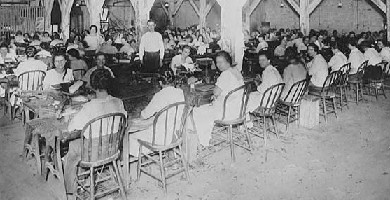
company in the United States and famous all over the world. La Belle employed over a
thousand people in the factory and another one hundred office workers and salesmen. In
1892, the company produced 40 million cigars! Their most popular brands were La Belle
Creole, Jackson Square and El Belmont.
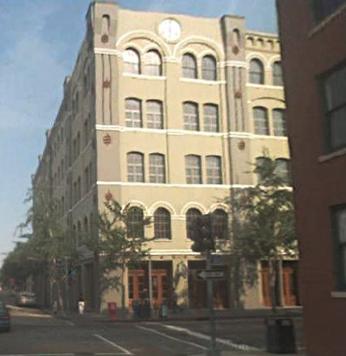
Simon Hernsheim died in 1898 and his company didn't last long after that, but the
building was used as a cigar factory until the late 1920's. When the law firm of Deutsch,
Kerrigan & Stiles purchased the building in 1980, it underwent a meticulous renovation
and stands today - a beautiful building - in the heart of the city's Arts-Warehouse District,
near the National World War II Museum.
part of the 20th centuries - New Orleans was known as the cigar manufacturing capital of
the United States. During that time, there were as many as ninety-three cigar makers in
the city:
New Orleans native Simon Hernsheim founded S. Hernsheim Brothers in 1857. It was a
tobacco company that supplied tobacco leaves to the European market. By the 1880's,
the company had flourished to the point that Mr. Hernsheim was able to build a 5-story
manufacturing facility at the corner of Julia and Magazine Streets. The La Belle Creole
Cigar and Tobacco Company became the second largest tobacco manufacturing
company in the United States and famous all over the world. La Belle employed over a
thousand people in the factory and another one hundred office workers and salesmen. In
1892, the company produced 40 million cigars! Their most popular brands were La Belle
Creole, Jackson Square and El Belmont.
Simon Hernsheim died in 1898 and his company didn't last long after that, but the
building was used as a cigar factory until the late 1920's. When the law firm of Deutsch,
Kerrigan & Stiles purchased the building in 1980, it underwent a meticulous renovation
and stands today - a beautiful building - in the heart of the city's Arts-Warehouse District,
near the National World War II Museum.
| La Belle Creole Cigar Company, 1925 |
| Mr. Hernsheim's La Belle Creole building today |
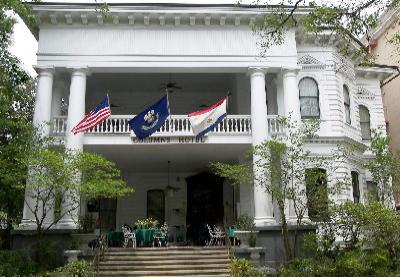
In 1883, Simon Hernsheim engaged well-known architect Thomas Sully to design a home
that would reflect his stature in the community. Sully did not disappoint. The result was a
beautiful 3-story Italianate mansion (the only one of Sully's houses in the Italianate style
still standing). Later renovations have changed the house's exterior appearance
somewhat, but it's still beautiful. Its interior features are considered among the grandest of
any late 19th century Louisiana home still standing. One of the most striking is the
mahogany stairwell - it rises to meet a fantastic domed stained glass skylight. The original
stained glass chandelier hangs in what was once the family dining room. Other
outstanding features are paneled mahogany ceilings, 12-foot solid mahogany doors,
antique fireplaces and frescoed friezes. One room contains the original built-in breakfront,
the only surviving piece of its kind in any residence designed by Thomas Sully.
Now known as the elegant Columns Hotel, its current owners have restored the historic
home to its original grandeur. It has been added to the National Register of Historic
Places.
Sadly, Mr. Hernsheim's life didn't end well. In 1898, after the death of his wife and some
burdensome family difficulties, Simon Hernsheim committed suicide by use of poison. His
heirs, hoping to keep his memory alive, donated $50,000 to the newly established Fisk
Free Public Library in his name. This gift allowed the fledgling library to purchase badly
needed new books. Some of the money was, also, invested and the interest from the
Hernsheim Fund allowed what would eventually become the New Orleans Public Library to
continue to grow its collections for many years to come.
According to reports of staff and guests, the Columns Hotel houses three gentle and
unassuming resident spirits - a man, a woman and a child. The well-dressed man, who
has appeared often, seems to take on the duty of host, making sure everything is okay
with his guests.
I like to think that this is Mr. Hernsheim, re-living happier days, still enjoying the home he
built from the rewards of his labor and the golden age of the American cigar. -- Nancy
that would reflect his stature in the community. Sully did not disappoint. The result was a
beautiful 3-story Italianate mansion (the only one of Sully's houses in the Italianate style
still standing). Later renovations have changed the house's exterior appearance
somewhat, but it's still beautiful. Its interior features are considered among the grandest of
any late 19th century Louisiana home still standing. One of the most striking is the
mahogany stairwell - it rises to meet a fantastic domed stained glass skylight. The original
stained glass chandelier hangs in what was once the family dining room. Other
outstanding features are paneled mahogany ceilings, 12-foot solid mahogany doors,
antique fireplaces and frescoed friezes. One room contains the original built-in breakfront,
the only surviving piece of its kind in any residence designed by Thomas Sully.
Now known as the elegant Columns Hotel, its current owners have restored the historic
home to its original grandeur. It has been added to the National Register of Historic
Places.
Sadly, Mr. Hernsheim's life didn't end well. In 1898, after the death of his wife and some
burdensome family difficulties, Simon Hernsheim committed suicide by use of poison. His
heirs, hoping to keep his memory alive, donated $50,000 to the newly established Fisk
Free Public Library in his name. This gift allowed the fledgling library to purchase badly
needed new books. Some of the money was, also, invested and the interest from the
Hernsheim Fund allowed what would eventually become the New Orleans Public Library to
continue to grow its collections for many years to come.
According to reports of staff and guests, the Columns Hotel houses three gentle and
unassuming resident spirits - a man, a woman and a child. The well-dressed man, who
has appeared often, seems to take on the duty of host, making sure everything is okay
with his guests.
I like to think that this is Mr. Hernsheim, re-living happier days, still enjoying the home he
built from the rewards of his labor and the golden age of the American cigar. -- Nancy
| Mr. Hernsheim's home, now the Columns Hotel |
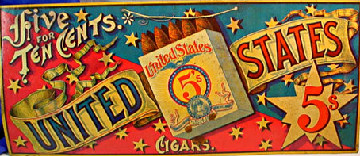
| La Belle Creole cigar store display sign, ca. 1900 |
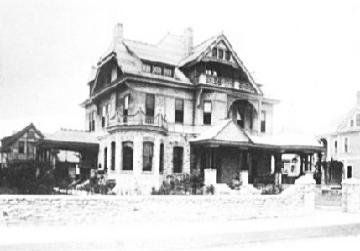
| Simon Hernsheim's brother, Isidore's home, 1890's |
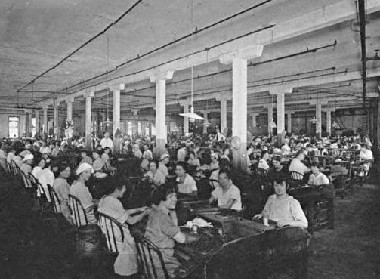
| Interior, La Belle Creole Cigar Company |
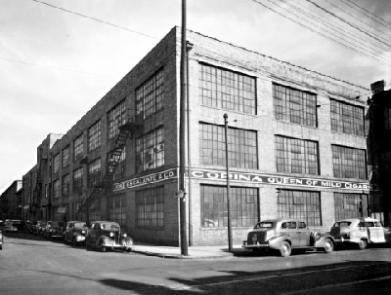
| Jose Escalante and Company, sign reads 'Jose Escalante and Co., Corina Queen of Mild Cigars;' located on Magazine and Poeyfarre Streets; ca. 1947. |
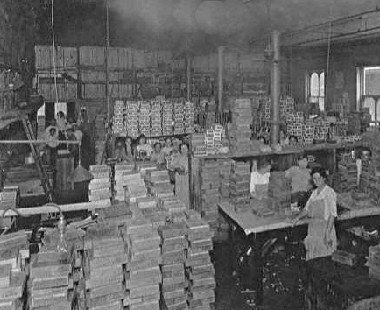
| Above & below, Seidenberg & Company, Inc., cigar manufacturer, New Orleans; dates unknown. |
| The link to this page is: http://old-new-orleans.com/NO_Cigars.html Back to Old New Orleans Whispers - Home |