| Vintage City Park Photos and Brief History |
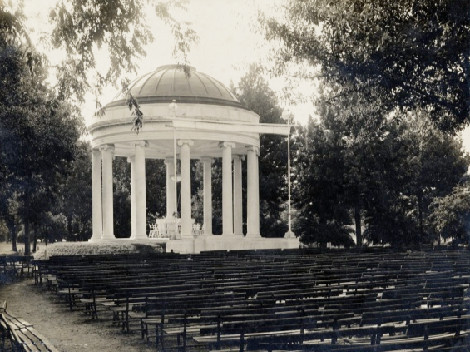
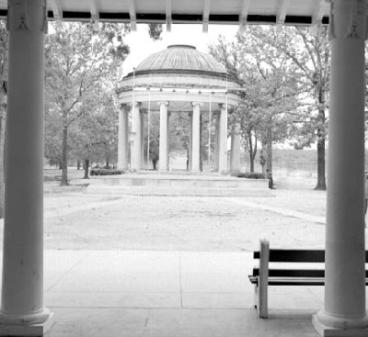
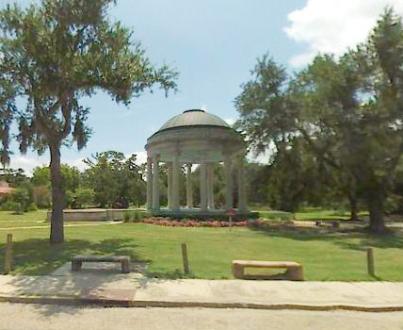
| Popp Bandstand, 1920's |
From the "History of New Orleans" by John Kendall, published in 1922: "City Park was once part of the
plantation of Louis Allard, having been purchased by his grandfather in the 1770's. Toward the end of
his life, Allard's fortunes declined and he was forced to dispose of his land. The last remnant,
comprising a part of the present park, was purchased by John McDonogh at sheriff's auction. At his
death in 1850, McDonogh left the land to the cities of New Orleans and Baltimore. New Orleans
acquired it and decided to devote it to use as a park. By special agreement, Allard was permitted to live
out his life on the property and, when he died, he was buried in a quiet spot under a favorite oak tree.
The tomb is still to be seen."
More duels were fought in New Orleans than in any other American city and the Allard property was a
popular destination of duelists. The location came to be known as the "Dueling Oaks" or the "Old
Dueling Ground." Many "affaires d'honneur" were settled under the great oaks (on one day in 1839, ten
duels were fought there). Dueling wasn't outlawed until 1890, 36 years after the property was made into
a public park.
During the Franklin Roosevelt administration in the late 1930's-early 1940's, the park underwent an
expansive improvement program. More than 20,000 people were employed through Works Progress
Administration, and $12 million Federal dollars were spent, building bridges, fountains, gardens, a
stadium and roads through the park, as well as digging more than 10 miles of lagoons, all the work done
by hand.
City Park is one of the oldest public parks in the country. Today, it encompasses over 1,300 acres of
land. It's the 6th largest public park in the United States and the 7th most visited. It has the largest
collection of mature live oaks in the world. The flooding of 2005 did extensive damage to the park,
destroying 1,000 trees and almost all of the plants in the Botanical Garden, but a majority of the 1,000
live oaks survived. Thanks to Herculean efforts by park staff and scores of volunteers, the park is
recovering. Buildings and attractions have been repaired and thousands of new plants and trees have
been planted. The park's 104-year-old carousel - one of only 100 antique wooden carousels in the
United States - was meticulously restored after the flood.
Part of City Park's charm lies in its buildings, bridges and sculptures, ranging between styles of Art
Deco, Neo-Classical Revival and Modern. Ten of City Park's bridges are named in a list of "Historic
Bridges of the United States."
Every holiday season brings another fantastic display of "Celebration in the Oaks" to City Park, where
nearly 1 million lights decorate the ancient oaks.
plantation of Louis Allard, having been purchased by his grandfather in the 1770's. Toward the end of
his life, Allard's fortunes declined and he was forced to dispose of his land. The last remnant,
comprising a part of the present park, was purchased by John McDonogh at sheriff's auction. At his
death in 1850, McDonogh left the land to the cities of New Orleans and Baltimore. New Orleans
acquired it and decided to devote it to use as a park. By special agreement, Allard was permitted to live
out his life on the property and, when he died, he was buried in a quiet spot under a favorite oak tree.
The tomb is still to be seen."
More duels were fought in New Orleans than in any other American city and the Allard property was a
popular destination of duelists. The location came to be known as the "Dueling Oaks" or the "Old
Dueling Ground." Many "affaires d'honneur" were settled under the great oaks (on one day in 1839, ten
duels were fought there). Dueling wasn't outlawed until 1890, 36 years after the property was made into
a public park.
During the Franklin Roosevelt administration in the late 1930's-early 1940's, the park underwent an
expansive improvement program. More than 20,000 people were employed through Works Progress
Administration, and $12 million Federal dollars were spent, building bridges, fountains, gardens, a
stadium and roads through the park, as well as digging more than 10 miles of lagoons, all the work done
by hand.
City Park is one of the oldest public parks in the country. Today, it encompasses over 1,300 acres of
land. It's the 6th largest public park in the United States and the 7th most visited. It has the largest
collection of mature live oaks in the world. The flooding of 2005 did extensive damage to the park,
destroying 1,000 trees and almost all of the plants in the Botanical Garden, but a majority of the 1,000
live oaks survived. Thanks to Herculean efforts by park staff and scores of volunteers, the park is
recovering. Buildings and attractions have been repaired and thousands of new plants and trees have
been planted. The park's 104-year-old carousel - one of only 100 antique wooden carousels in the
United States - was meticulously restored after the flood.
Part of City Park's charm lies in its buildings, bridges and sculptures, ranging between styles of Art
Deco, Neo-Classical Revival and Modern. Ten of City Park's bridges are named in a list of "Historic
Bridges of the United States."
Every holiday season brings another fantastic display of "Celebration in the Oaks" to City Park, where
nearly 1 million lights decorate the ancient oaks.
| Popp Bandstand; constructed in 1917; John Phillip Sousa performed here in 1928; above, 1939; below, 2008. |

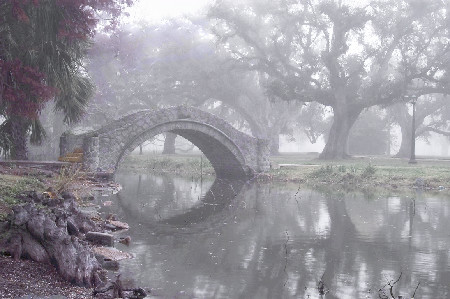
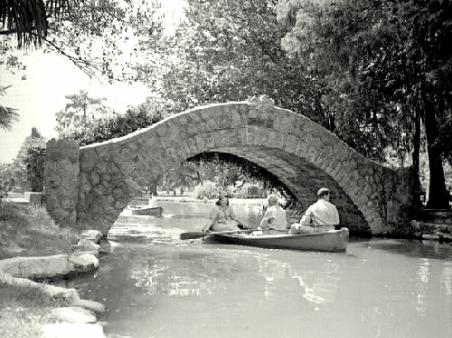
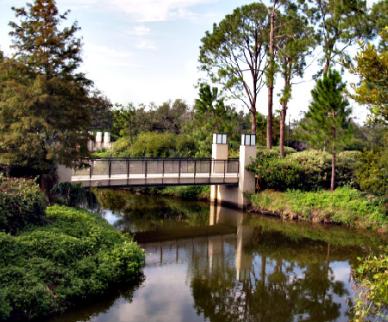
| One of City Park's arch bridges, above in 1942; below, today. (Many thanks to JoAnn Randall for the photo below.) |
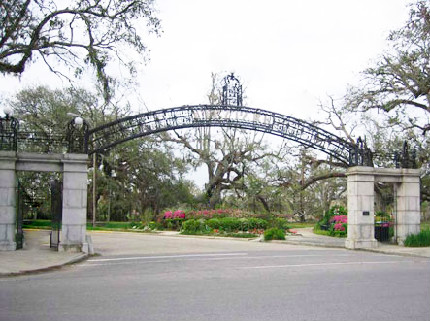
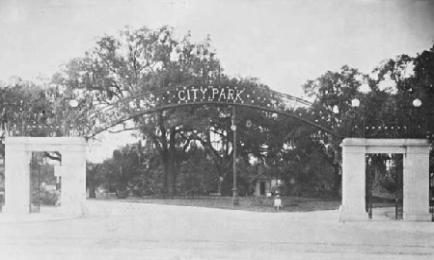
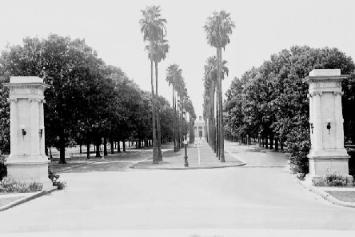
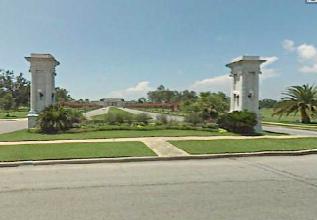
| The City Park Avenue entrance; above, 1900, below, 2007. |
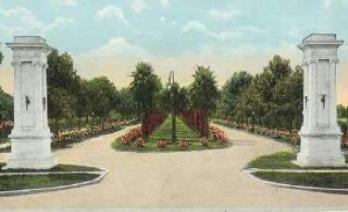
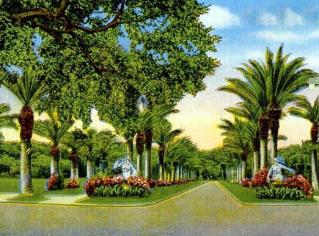
| Wisner Avenue entrance; left, early 1900's; right, 1920's |
| Some photos on this page are courtesy of the Library of Congress. The link to this page is: http://old-new-orleans.com/NO_City_Park_Photos.html The Hyams Wading Pools The City Park Peristyle Vintage City Park Photos, 1899-1913 Click here for interactive movie of City Park Carousel. Back to Old New Orleans Whispers - Home |
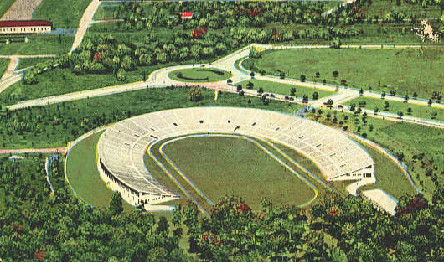
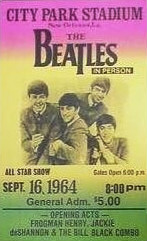
| Left, aerial view of WPA's newly completed City Park Stadium, 1940's; right, poster for the Beatles' concert held there, 1964. The stadium was later renamed Tad Gormley Stadium. After flooding damaged the field in 2005, Saints football player, Reggie Bush, donated over $80,000 to repair the field so high school teams could continue to play there; in his honor, the playing field is now known as Reggie Bush Field. |
| Wisner Avenue entrance; left, 1936; above, 2007. |
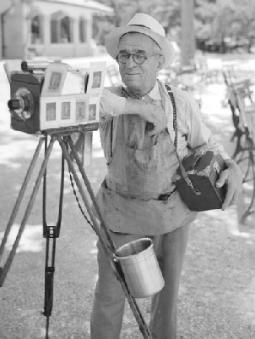
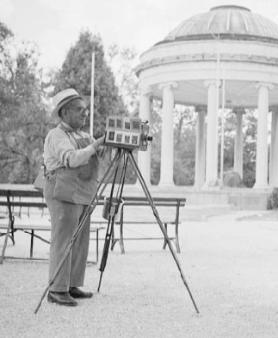
| City Park photographer, 1941 |
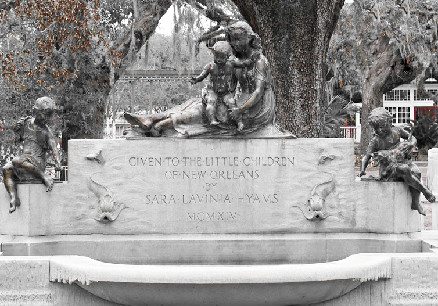
| Hyams Fountain & Wading Pool, "Given to the little children of New Orleans" by Sara Hyams, constructed in 1914; the fountain is now a part of the Carousel Garden. |
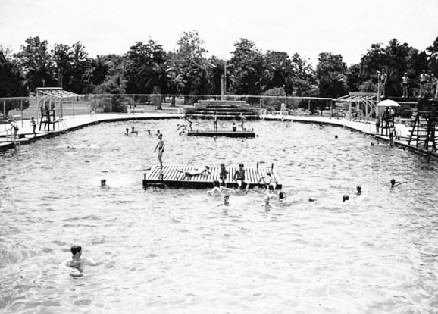
| Irby swimming pool, constructed 1924. |
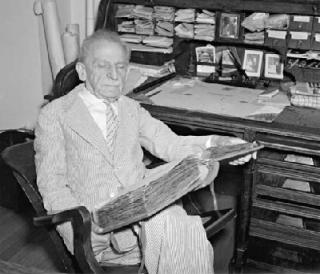
| Felix Dreyfous reads through minutes of Park Improvement Association, 1941; a street in the park is named after Mr. Dreyfous, an original member of the group. |
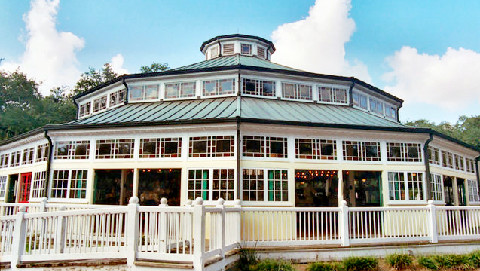
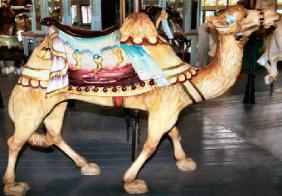
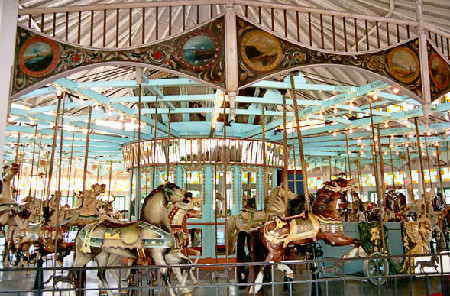
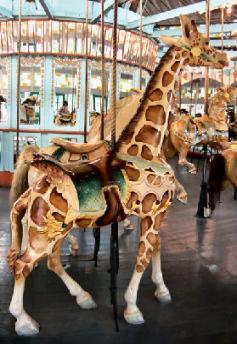
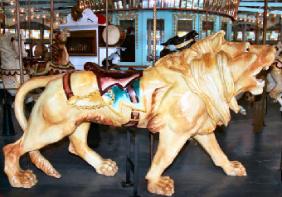
| The first carousel debuted in City Park in 1897 -- it was pulled by mules! In 1906, this magnificent mechanical carousel was acquired. It's one of only 100 antique wooden carousels still in operation in the United States. It was painstakingly restored after the 2005 flood damaged it. Many thanks to Susan McNeill, for the carousel photos. |
| A WPA-constructed bridge in City Park, 2008. |
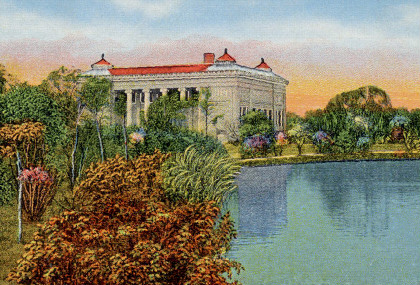
| New Orleans Museum of Art, in City Park, is shown above when it was called Delgado Museum of Art, ca. 1920's. The museum was established in 1911, with a bequest from Isaac Delgado. |
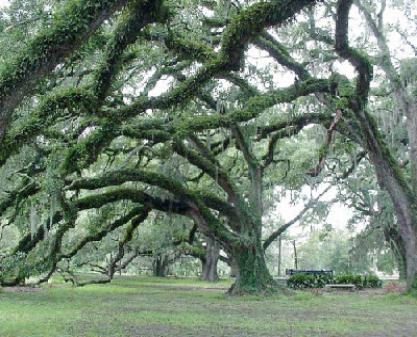
| A few of City Park's oaks. [This photo and the one below are thanks to Louis Wiltz.] |
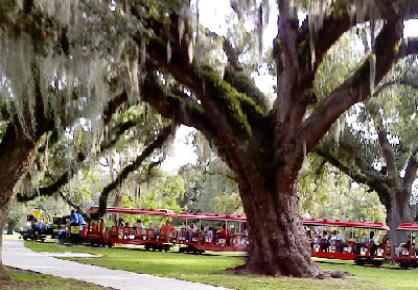
| City Park train winds under the hanging moss of the ancient oaks. |
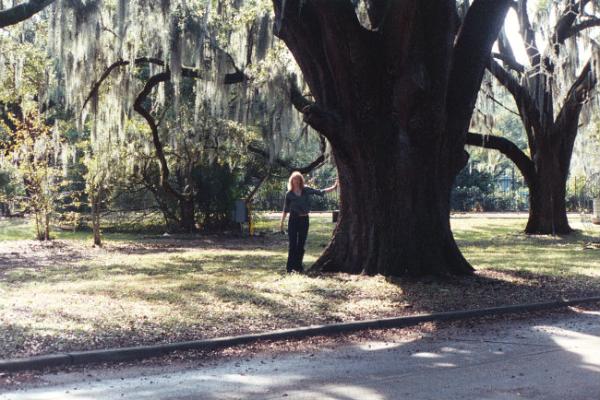
| Ancient oak trees of City Park; photo some time before 2005. Many thanks to Duane Cambre for sharing this picture. |