
| At the Movies |
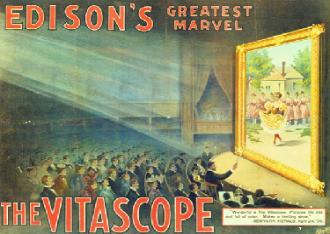
It is believed that the very first building in the U.S. that was intended for use strictly as
a "moving pictures" venue was opened in New Orleans in 1896. It was called
Vitascope Hall and it was located on the corner of Canal Street and Exchange Place.
The building fell to the wrecker's ball many years ago. Another business stands in its
place today. And, sadly, the site where U.S. movie theater history was probably made
doesn't even bear a marker to indicate its claim to fame.
To read more about New Orleans' Vitascope Hall, click here.
a "moving pictures" venue was opened in New Orleans in 1896. It was called
Vitascope Hall and it was located on the corner of Canal Street and Exchange Place.
The building fell to the wrecker's ball many years ago. Another business stands in its
place today. And, sadly, the site where U.S. movie theater history was probably made
doesn't even bear a marker to indicate its claim to fame.
To read more about New Orleans' Vitascope Hall, click here.
Most of the early movie houses started life as vaudeville theaters. They showed silent
movie reels between vaudeville shows. Ultimately, when motion pictures replaced
vaudeville in the public's affection, they devoted themselves entirely to movies. All
across America, in the 1920's, grand movie houses were constructed -- the beginning
of the Golden Age of movie palaces. The grand old theaters lasted until the
overpowering onslaught of suburban megaplexes.
Some of New Orleans' downtown movie palaces have given way to the wrecking ball,
but many are still here, now performing arts theaters, condos or businesses. Some
are waiting to be transformed.
movie reels between vaudeville shows. Ultimately, when motion pictures replaced
vaudeville in the public's affection, they devoted themselves entirely to movies. All
across America, in the 1920's, grand movie houses were constructed -- the beginning
of the Golden Age of movie palaces. The grand old theaters lasted until the
overpowering onslaught of suburban megaplexes.
Some of New Orleans' downtown movie palaces have given way to the wrecking ball,
but many are still here, now performing arts theaters, condos or businesses. Some
are waiting to be transformed.
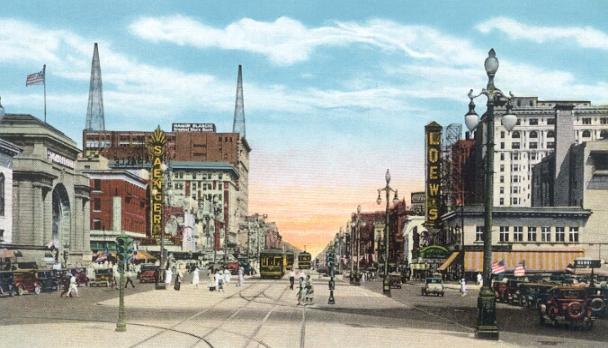
| Canal Street, 1930; two of New Orleans' most popular movie theaters, Saenger on the left and Loew's on the right. |

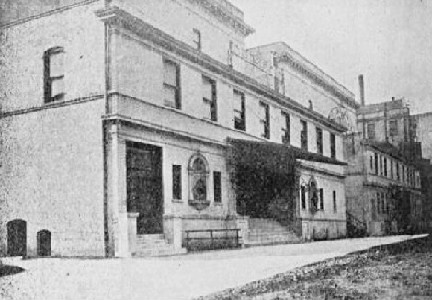
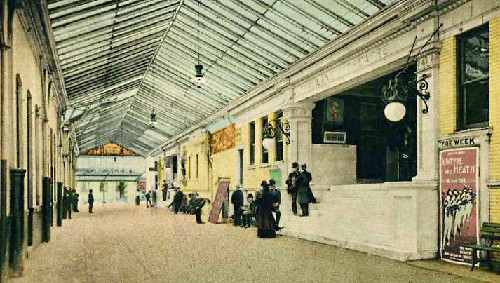
| Tulane and Crescent Theaters: above, the arcade; below, the exterior, ca. 1904. |
The twin theaters, Crescent and Tulane, opened in 1898, at Baronne and Common
(the original site of the college that would ultimately become Tulane University). The
theaters were designed by Thomas Sully and known for the Arcade which served them
both. The Tulane show-cased legitimate theater and the Crescent presented
vaudeville and, later, "talking pictures." The theaters were torn down in 1937 to make
way for the Roosevelt Hotel annex.
(the original site of the college that would ultimately become Tulane University). The
theaters were designed by Thomas Sully and known for the Arcade which served them
both. The Tulane show-cased legitimate theater and the Crescent presented
vaudeville and, later, "talking pictures." The theaters were torn down in 1937 to make
way for the Roosevelt Hotel annex.
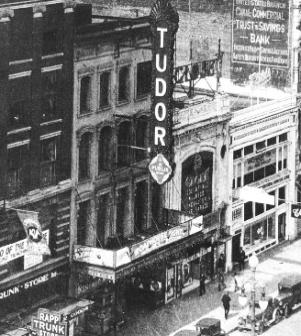
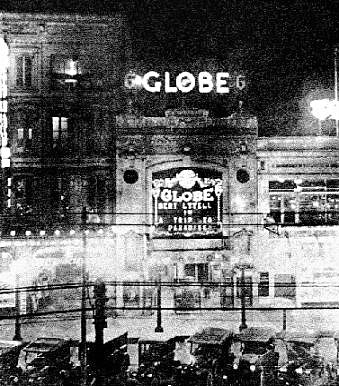
| Left, the Globe, about 1920; above, the Tudor and Globe, 1930. |
In 1914, the Tudor opened on Canal, between Camp and St. Charles. Four years
later, the Globe opened next door. The Tudor was the first to install
sound-reproducing equipment and had the distinction of showing the first talking
movies in the city. When the Globe opened, this review appeared in The
Times-Picayune (excerpted): "There are few theatres anywhere that present the
elegance of appointment and the refinement of finishing that are offered in the new
Globe Theatre that has recently been opened by Herman Fitchenberg."
later, the Globe opened next door. The Tudor was the first to install
sound-reproducing equipment and had the distinction of showing the first talking
movies in the city. When the Globe opened, this review appeared in The
Times-Picayune (excerpted): "There are few theatres anywhere that present the
elegance of appointment and the refinement of finishing that are offered in the new
Globe Theatre that has recently been opened by Herman Fitchenberg."
The Trianon opened in 1912, near Canal and Carondelet. An excerpt of a review at
the time of the opening: "The lobby is well-illuminated by many lights. The mural
decorations are symbolic of various scenes in Louisiana. A five-piece orchestra
furnishes the musical accompaniment to the three reels of first-run pictures, for which a
price of ten cents is charged." An ad for the Trianon read: "Like a frothy summer
confection, our ventilation keeps our theater cool." Intimately familiar with Louisiana
summers as I am, I have a feeling that may have been a little bit of an over-statement.
But, keeping customers cool during the city's hot summer months was a serious
challenge in the days before air-conditioning. Some theaters had huge storage tanks
in their basements, in which ice was kept during show times.
the time of the opening: "The lobby is well-illuminated by many lights. The mural
decorations are symbolic of various scenes in Louisiana. A five-piece orchestra
furnishes the musical accompaniment to the three reels of first-run pictures, for which a
price of ten cents is charged." An ad for the Trianon read: "Like a frothy summer
confection, our ventilation keeps our theater cool." Intimately familiar with Louisiana
summers as I am, I have a feeling that may have been a little bit of an over-statement.
But, keeping customers cool during the city's hot summer months was a serious
challenge in the days before air-conditioning. Some theaters had huge storage tanks
in their basements, in which ice was kept during show times.
| The Trianon, date unknown |
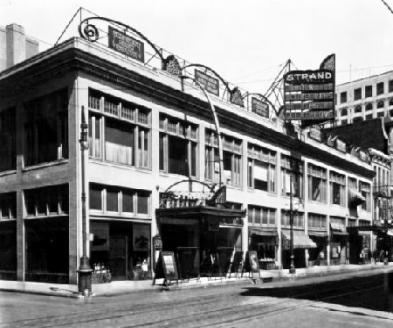
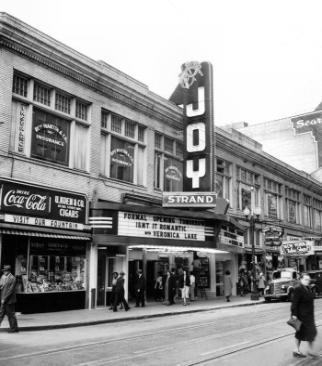
The Strand Theater opened on Baronne and Gravier in 1917. It promised "swirling
breezes generated by giant fan-typhoons." The Strand was the flagship of the
Saenger Amusement Company until 1927, when the grand Saenger Theatre opened.
(Saenger, also, owned the city's Globe and Tudor theaters, the Trianon, the Tivoli, the
Liberty, the Alamo and, for awhile, the St. Charles.) From a review at the time of the
opening: "The Strand far exceeded my most pleasurable anticipations. There is no
other theater that I have seen outside of New York that will compare with this one in
elegance of design and treatment in its furnishings."
breezes generated by giant fan-typhoons." The Strand was the flagship of the
Saenger Amusement Company until 1927, when the grand Saenger Theatre opened.
(Saenger, also, owned the city's Globe and Tudor theaters, the Trianon, the Tivoli, the
Liberty, the Alamo and, for awhile, the St. Charles.) From a review at the time of the
opening: "The Strand far exceeded my most pleasurable anticipations. There is no
other theater that I have seen outside of New York that will compare with this one in
elegance of design and treatment in its furnishings."
| Above, the Strand, ca. 1941; right, the theater after it became known as the Joy Strand, ca. 1948. |
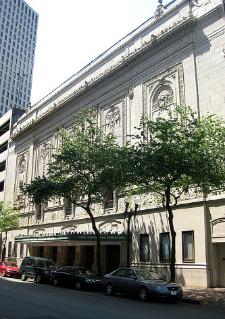
The Orpheum Theater, on University Place, opened as a vaudeville
house in 1921 and many well-known entertainers such as Houdini and
Burns & Allen appeared there. Before long, it offered movies, as well It,
also, served as a site of several Carnival balls. It was one of the more
lavish theaters of the golden movie palace days. The grand old
Orpheum was scheduled for demolition in 1979, but was granted a
reprieve at the last minute. It underwent major renovation and,
eventually, re-opened as home to the Louisiana Philharmonic Orchestra,
whose musicians prized the auditorium for the quality of its acoustics.
The building was severely damaged during the flood following the levee
failures. It has not re-opened. The building is listed on the National
Register of Historic Places. In 2009, it was placed on the Louisiana
Landmarks Society's list of most endangered historical sites in the city.
Update: The Orpheum was purchased in February 2014 and a 15
million dollar renovation is under way with the goal of using the theater
for the return of the Louisiana Philharmonic Orchestra and other musical
performances, movie premieres and private events.
house in 1921 and many well-known entertainers such as Houdini and
Burns & Allen appeared there. Before long, it offered movies, as well It,
also, served as a site of several Carnival balls. It was one of the more
lavish theaters of the golden movie palace days. The grand old
Orpheum was scheduled for demolition in 1979, but was granted a
reprieve at the last minute. It underwent major renovation and,
eventually, re-opened as home to the Louisiana Philharmonic Orchestra,
whose musicians prized the auditorium for the quality of its acoustics.
The building was severely damaged during the flood following the levee
failures. It has not re-opened. The building is listed on the National
Register of Historic Places. In 2009, it was placed on the Louisiana
Landmarks Society's list of most endangered historical sites in the city.
Update: The Orpheum was purchased in February 2014 and a 15
million dollar renovation is under way with the goal of using the theater
for the return of the Louisiana Philharmonic Orchestra and other musical
performances, movie premieres and private events.
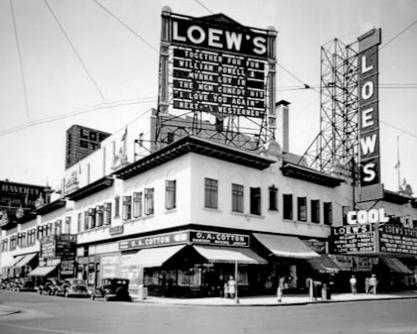
In 1926, the Loew's State Theatre opened as a vaudeville house, but included movies
from the beginning. At the time it opened, the Loew's was the largest movie theater in
the city, with 3,400 seats. The theater thrived for many years as one of the most popular
on Canal Street. In the late 1980's, it underwent extensive restoration. Adjoining
commercial spaces were remodeled and connected to the theater's lobbies, creating a
large entertainment complex. Sadly, the building is now vacant and languishing.
from the beginning. At the time it opened, the Loew's was the largest movie theater in
the city, with 3,400 seats. The theater thrived for many years as one of the most popular
on Canal Street. In the late 1980's, it underwent extensive restoration. Adjoining
commercial spaces were remodeled and connected to the theater's lobbies, creating a
large entertainment complex. Sadly, the building is now vacant and languishing.
| Loew's State Theater, 1930's |
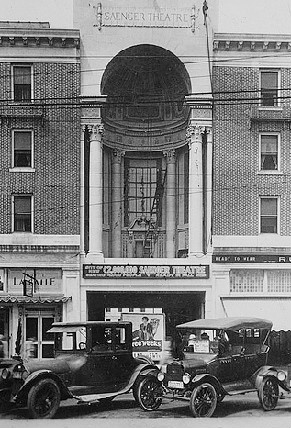
The lavish Saenger Theatre opened across the street from Loew's in 1927. It took
several years to design and construct and cost $2.5 million. When people talk about
"movie palaces," they have a theater like the Saenger in mind. It boasted 4,000 seats
and the interior was designed to resemble an Italian Baroque courtyard. Lights were
installed in the ceiling, arranged in the shape of the constellations of the night sky. The
Saenger had special effects machines that projected images of moving clouds,
sunrises/sunsets across the theater's interior. (Sometimes, if the movie wasn't
interesting, I'd lean back and spend some time admiring the night sky show on the
ceiling, which never failed to be entertaining.)
In 1964, the balcony area of the Saenger was closed off from the rest of the theater and
became the Saenger-Orleans, home to big-budget, long-run features. Both spaces
closed in the 1970's, but the Saenger-Orleans was converted into a performing arts
center, offering touring theater productions.
Flooding from the 2005 levee failures caused extensive damage to the Saenger and it
sat vacant for several years. But, happily, the Saenger was meticulously restored and
returned to its original glory at a restoration cost of $50 million dollars. It re-opened in
2013. The Saenger is on the National Register of Historic Places as one of the
outstanding movie palaces of pre-depression America. It is one of only a handful of
Saenger movie palaces still standing in the United States.
several years to design and construct and cost $2.5 million. When people talk about
"movie palaces," they have a theater like the Saenger in mind. It boasted 4,000 seats
and the interior was designed to resemble an Italian Baroque courtyard. Lights were
installed in the ceiling, arranged in the shape of the constellations of the night sky. The
Saenger had special effects machines that projected images of moving clouds,
sunrises/sunsets across the theater's interior. (Sometimes, if the movie wasn't
interesting, I'd lean back and spend some time admiring the night sky show on the
ceiling, which never failed to be entertaining.)
In 1964, the balcony area of the Saenger was closed off from the rest of the theater and
became the Saenger-Orleans, home to big-budget, long-run features. Both spaces
closed in the 1970's, but the Saenger-Orleans was converted into a performing arts
center, offering touring theater productions.
Flooding from the 2005 levee failures caused extensive damage to the Saenger and it
sat vacant for several years. But, happily, the Saenger was meticulously restored and
returned to its original glory at a restoration cost of $50 million dollars. It re-opened in
2013. The Saenger is on the National Register of Historic Places as one of the
outstanding movie palaces of pre-depression America. It is one of only a handful of
Saenger movie palaces still standing in the United States.
| Saenger Theatre, ca. 1920's |
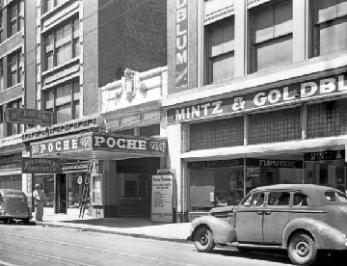
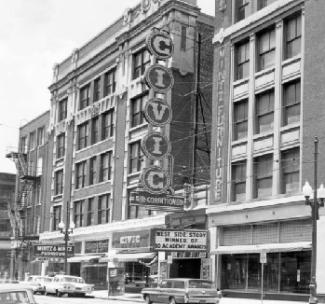
In 1906, the Shubert Theater opened as a vaudeville house in the 500 block of Baronne
Street. By 1910, it had become the Lafayette. From the '20's to '40's, it was the Star, the
Poche and, finally, in 1951, it became the Civic. In the 1960's, it was briefly home to the
Repertory Theatre of New Orleans. It sat empty for many years before being purchased
and renovated, using historic preservation guidelines, and turned into apartments. It is
the oldest surviving movie theater building in New Orleans.
Street. By 1910, it had become the Lafayette. From the '20's to '40's, it was the Star, the
Poche and, finally, in 1951, it became the Civic. In the 1960's, it was briefly home to the
Repertory Theatre of New Orleans. It sat empty for many years before being purchased
and renovated, using historic preservation guidelines, and turned into apartments. It is
the oldest surviving movie theater building in New Orleans.
| Above, the Civic when it was known as the Poche, 1941; right, 1962. |
| The photo of the Orpheum is courtesy of Wally Gobetz. The link to this page is: http://old-new-orleans.com/NO_Movies.html ~ ~ ~ Back to Old New Orleans Whispers - Home |
| CLICK HERE to see a list of movies playing at several movie theaters in New Orleans in 1922. |